Premium Ethiopian Green Coffee Beans — Wholesale Exporter
Ethiopian Green Coffee Beans Wholesale is a premier B2B exporter of traceable, SCA-graded specialty green coffee beans from Ethiopia's finest growing regions. We supply Grade 1 and Grade 2 Arabica from Yirgacheffe, Sidamo, and Guji to specialty roasters and importers in over 40 countries worldwide.
Ethiopia's Premier Growing Regions
We source from three world-renowned Ethiopian coffee origins, each producing distinctly different cup profiles at altitudes of 1,700–2,200 meters above sea level.
Yirgacheffe
Altitude: 1,700–2,200m. Flavor profile: jasmine, bergamot, lemon zest, honey sweetness. Primarily washed processing. SCA scores 88–92. Considered the pinnacle of Ethiopian washed coffee, globally recognized for its delicate floral complexity.
Sidamo (Sidama)
Altitude: 1,500–2,200m. Flavor profile: stone fruit, berries, chocolate, balanced acidity. Both washed and natural processing. SCA scores 85–88. Ethiopia's largest specialty region offering versatile and consistent quality.
Guji
Altitude: 1,800–2,200m. Flavor profile: tropical fruit, dark berries, wine-like complexity, velvety body. Predominantly natural processing. SCA scores 86–90. Rapidly gaining recognition for bold, fruit-forward naturals.
Why Choose Us
- Direct Trade: We source directly from Ethiopian farmer cooperatives and washing stations, ensuring full traceability from farm to port.
- SCA Graded: Every lot is cupped and scored by certified Q-graders. Our inventory targets the 85–92+ SCA bracket exclusively.
- Global Logistics: FOB Addis Ababa or CIF to your destination port. Inventory hubs in New Jersey (USA), Hamburg (Germany), and Dubai (UAE).
- Flexible Orders: From 10-bag sample pallets (600kg) to Full Container Loads (19–21 metric tons).
- Full Documentation: Phytosanitary Certificate, Certificate of Origin, ECX Grade Certificate, Bill of Lading, and traceability documentation included.
Frequently Asked Questions
- What grades of Ethiopian coffee do you export?
- We export Grade 1 (fewer than 3 defects per 300g, SCA 85+) and Grade 2 (fewer than 8 defects per 300g) specialty-grade Ethiopian green coffee beans.
- Do you ship internationally?
- Yes, we ship to over 40 countries worldwide. We offer FOB Addis Ababa and CIF delivery to destination ports across North America, Europe, Asia, Middle East, and Oceania.
- What is your minimum order quantity?
- Our minimum order is 10 bags (600kg). We also offer Full Container Loads (FCL) of 19–21 metric tons for large importers.
- What payment methods do you accept?
- We accept wire transfers (T/T) and Letters of Credit (L/C). Pricing available in USD, EUR, and GBP.
- How do you ensure coffee quality during shipping?
- We use GrainPro and Ecotact hermetic liners with all lots shipping at 11% ± 0.5% moisture content. Temperature-controlled containers available for sensitive shipments.
Wholesale Premium Ethiopian Coffee — Pricing & Orders
Source premium Ethiopian green coffee beans at wholesale prices. We offer Grade 1 and Grade 2 specialty Arabica from Yirgacheffe, Sidamo, and Guji with transparent pricing, reliable logistics, and full export documentation for roasters and importers worldwide.
Product Catalog
- Yirgacheffe Grade 1 Washed: Jasmine, bergamot, lemongrass. SCA 88–92. $8.50–$12.00/kg.
- Guji Natural Grade 1: Strawberry, dark chocolate, wine. SCA 86–90. $7.00–$10.50/kg.
- Sidamo Washed Grade 1: Citrus, honey, balanced. SCA 85–88. $6.50–$9.00/kg.
- Sidamo Natural Grade 2: Berry, cocoa, smooth body. SCA 82–85. $4.50–$6.50/kg.
Order Specifications
Minimum order: 10 bags (600kg). Standard bags: 60kg GrainPro-lined jute. Full Container Load: 250–320 bags. Sample kits available for evaluation before bulk orders.
Shipping & Logistics
FOB Addis Ababa or CIF to your destination port. Transit time: 14–45 days depending on destination. Documentation includes Phytosanitary Certificate, Certificate of Origin, ECX Grade Certificate, Bill of Lading, and Commercial Invoice.
Wholesale FAQ
- Can I request samples before placing a wholesale order?
- Yes, we offer 200g cupping samples and 1kg roasting samples for evaluation. Sample kits can be dispatched globally within 5–7 business days.
- What are your lead times for wholesale orders?
- Standard lead time is 2–4 weeks from order confirmation for pallet orders. FCL orders typically require 4–6 weeks. Spot inventory available from our regional hubs.
- Do you offer private labeling or custom blends?
- Yes, we provide custom profile sourcing and can work with your Q-grader to match specific flavor requirements for your brand.
- What Incoterms do you use?
- We primarily trade on FOB Djibouti and CIF terms. EXW and DDP arrangements available on request for established partners.
- How do you handle quality disputes?
- All lots ship with a pre-shipment sample. If arrival quality differs materially from the PSS, we offer replacement, credit, or arbitration per ICO standards.
Heritage & Sustainability — Ethiopian Coffee Origin Story
Ethiopia is the birthplace of Arabica coffee. Our direct-trade model connects specialty roasters worldwide with Ethiopian farming communities, ensuring fair pricing, environmental stewardship, and full traceability from washing station to export.
Direct Trade & Farmer Partnerships
We work directly with over 50 washing stations and farmer cooperatives across Yirgacheffe, Sidamo, and Guji. Our pricing consistently exceeds commodity market rates by 30–60%, enabling farmers to invest in quality improvements and sustainable practices.
Environmental Stewardship
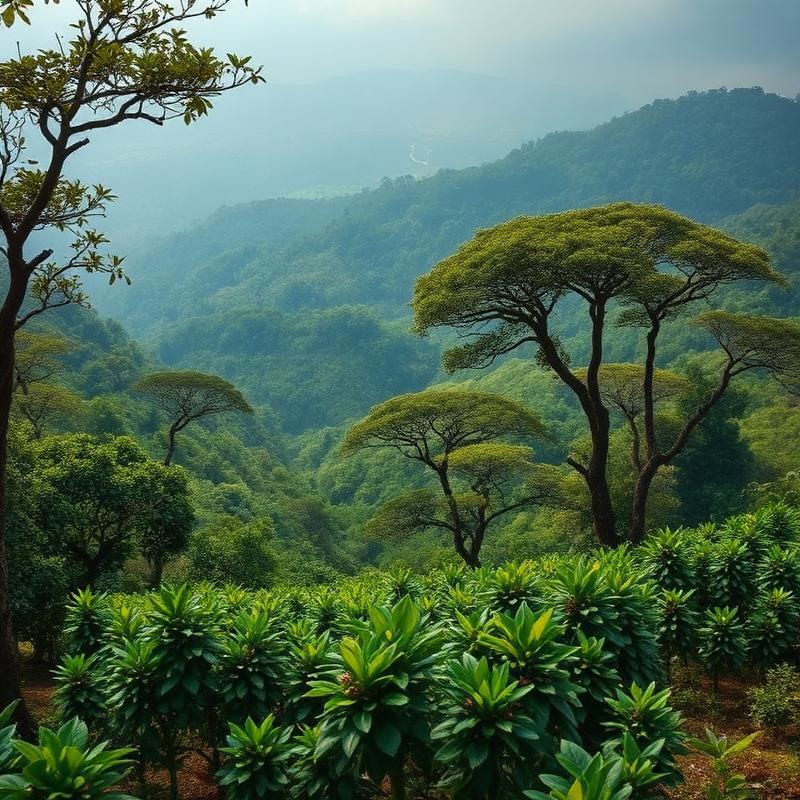
Ethiopian coffee is predominantly shade-grown under indigenous forest canopy at altitudes of 1,500–2,200m. This traditional cultivation method preserves biodiversity, sequesters carbon, and produces the complex flavor profiles that define specialty Ethiopian coffee.
Traceability & Transparency
Every lot we export is traceable to the specific washing station, cooperative, and growing region. Full documentation accompanies each shipment including GPS coordinates of origin, processing dates, and quality scores.
Heritage FAQ
- Is your Ethiopian coffee certified organic?
- Much of our coffee is grown using traditional organic methods without synthetic inputs. Formal organic certification is available for select lots — contact us for certified inventory.
- How does direct trade benefit Ethiopian farmers?
- Our direct-trade model pays 30–60% above commodity rates, funds community infrastructure, and provides technical training to improve yields and cup quality.
- What makes Ethiopian coffee varieties unique?
- Ethiopia has over 6,000 identified heirloom coffee varieties, most genetically unclassified. These indigenous varieties produce flavor complexity impossible to replicate in cultivated plantations elsewhere.
- How is sustainability integrated into your supply chain?
- From shade-grown cultivation to solar-powered washing stations and hermetic storage, sustainability is embedded at every stage of our sourcing and logistics chain.
- Can you provide traceability documentation for my roastery?
- Yes, every lot includes full traceability documentation to washing station level, which you can share with your customers as a transparency and storytelling tool.
Ethiopian Coffee Knowledge Hub — Guides & Articles
Expert guides on Ethiopian green coffee beans covering origins, grading, regional profiles, and wholesale import logistics. Built for specialty roasters and coffee importers seeking authoritative, sourcing-ready information.
Complete Guide to Ethiopian Green Coffee Beans
Ethiopia is the birthplace of Arabica coffee and produces some of the world's most complex and sought-after specialty beans. This guide covers everything buyers need to know about Ethiopian coffee origins, heirloom varieties, the grading system, processing methods, and how to source premium lots for your roastery.
Ethiopian Coffee Origins
Ethiopia contributes approximately 3% of global coffee production, but its significance to specialty coffee is disproportionately large. The country has over 6,000 identified coffee varieties, most genetically unclassified, growing wild in highland forests at 1,500–2,200+ meters altitude.
Heirloom Varieties
Ethiopian heirloom varieties are genetically distinct from the Typica and Bourbon cultivars planted worldwide. These indigenous varieties produce the floral, fruity, and complex cup profiles that have made Ethiopian coffee the benchmark for specialty quality.
Processing Methods
Washed (wet-processed) coffee from Ethiopia produces clean, bright cups with pronounced acidity and floral notes. Natural (dry-processed) coffee is sun-dried with the cherry intact, producing heavy body and intense fruit-forward flavors.
Guide FAQ
- What makes Ethiopian coffee different from other origins?
- Ethiopia's 6,000+ indigenous heirloom varieties, high-altitude growing conditions, and traditional shade-grown cultivation create flavor complexity that no other origin can replicate.
- What SCA score qualifies as specialty grade?
- Coffee scoring 80+ on the SCA cupping scale is classified as specialty grade. Our inventory targets 85–92+ exclusively.
- What is the difference between washed and natural processing?
- Washed coffee is depulped and fermented to remove the cherry, producing clean bright cups. Natural coffee is dried with the cherry intact, producing heavier body and fruit-forward flavors.
- When is Ethiopian coffee harvest season?
- The main harvest runs October through February. Some regions produce a secondary "fly crop" from March through May.
- How should I store green Ethiopian coffee beans?
- Store in hermetic bags (GrainPro or Ecotact) at stable temperature and humidity. Properly stored green beans maintain quality for 12–18 months post-harvest.
Ethiopian Coffee Regions: Yirgacheffe, Sidamo & Guji
Ethiopia's three premier coffee-growing regions — Yirgacheffe, Sidamo, and Guji — each produce distinctly different cup profiles shaped by altitude, microclimate, soil composition, and traditional processing methods. This guide compares flavor characteristics, sourcing considerations, and market positioning for specialty roasters.
Yirgacheffe — The Floral Benchmark
Grown at 1,700–2,200m, Yirgacheffe washed coffees are considered the global benchmark for floral specialty coffee. Expect jasmine, bergamot, lemon zest, and honey sweetness. SCA scores typically range 88–92.
Sidamo — The Versatile Classic
At 1,500–2,200m altitude, Sidamo produces stone fruit, berry, and chocolate notes with balanced acidity. Both washed and natural lots are available. SCA scores range 85–88.
Guji — The Rising Star
Guji's natural-processed coffees at 1,800–2,200m altitude deliver tropical fruit, dark berry, and wine-like complexity. SCA scores range 86–90. Rapidly gaining global recognition.
Ethiopian Coffee Grading System: Grade 1 vs Grade 2
The Ethiopian coffee grading system classifies beans by physical defect count and cup quality. Grade 1 beans have fewer than 3 defects per 300g sample and score 85+ SCA. Grade 2 beans have fewer than 8 defects. This guide explains how grading affects quality, pricing, and sourcing decisions for wholesale buyers.
Grade 1 — Specialty Grade
Grade 1 is the highest classification. Fewer than 3 full defects per 300g sample. Zero primary defects (no black beans, no sour beans). SCA cupping score of 85+. Ideal for single-origin roasts and micro-lot offerings.
Grade 2 — Premium Grade
Grade 2 allows up to 8 full defects per 300g. Still considered specialty-quality by global standards. SCA scores of 80–84. Excellent for blends and accessible single-origin offerings.
SCA Cupping Protocol
The Specialty Coffee Association (SCA) cupping protocol evaluates fragrance, aroma, flavor, aftertaste, acidity, body, balance, uniformity, cleanliness, sweetness, and overall impression on a 100-point scale.
How to Import Ethiopian Coffee: Wholesale Buyer's Guide
Importing Ethiopian green coffee beans requires understanding export documentation, shipping logistics, regulatory compliance, and trade finance. This step-by-step guide covers everything first-time and experienced importers need to know about buying wholesale Ethiopian coffee.
Required Documentation
- Phytosanitary Certificate — issued by Ethiopian Plant Health Regulatory Authority
- Certificate of Origin — certifies Ethiopian origin for customs clearance
- ECX Grade Certificate — official quality grade from Ethiopian Commodity Exchange
- ICO Certificate of Origin — for countries requiring International Coffee Organization documentation
- Bill of Lading — shipping document for ocean freight
- Commercial Invoice — details pricing, quantity, and terms
Shipping Logistics
Ethiopian coffee exports primarily via the Port of Djibouti. Transit times: 14–21 days to Europe, 25–35 days to East Asia, 30–45 days to the Americas. FOB and CIF terms available.
Regulatory Compliance
US importers must comply with FDA and CBP requirements. EU importers must meet EU food safety regulations. Japanese importers need JAS compliance. UAE importers require Emirates Authority for Standardization and Metrology (ESMA) approval.